
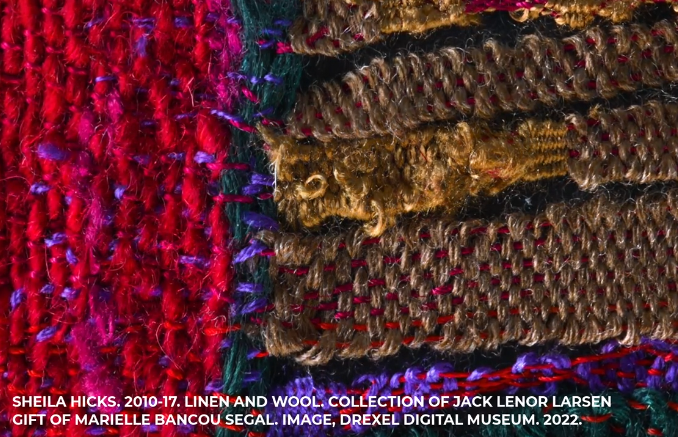
Overview
Reflectance Transformation Imaging is a computational imaging method in which an object is photographed repeatedly under controlled variations in illumination. In this research, historic textiles are imaged using a multi-light capture arrangement with polarization filtering to separate diffuse and specular response. The resulting dataset supports the computation of physically descriptive surface and material information, enabling a more analytically useful representation than conventional photographic documentation alone.
This approach is particularly valuable for textiles, whose structure and appearance are strongly dependent on changing light conditions. Surface relief, weave definition, luster, and areas of wear can become more legible through RTI-derived data than through static image capture.
Research Focus
The research focuses on the documentation and study of historic textiles, where conventional digitization methods often fail to capture the optical and structural complexity of woven surfaces. Because these objects are defined not only by color and pattern but also by reflectance behavior, fiber structure, and surface variation, RTI offers a means of producing richer digital surrogates for conservation, analysis, and interpretation.
The published paper situates this work within the broader problem of textile preservation and digital access, emphasizing how controlled multi-light imaging can assist in recording material characteristics that are difficult to preserve through standard photographic workflows.
The work was published in the Journal of Textile Science & Fashion Technology (JTSFT).
My Contributions
My contributions to the project included setting up the RTI capture rig and working on a web-based visualizer for rendering the computed 3D mesh and material files generated through the RTI process.